
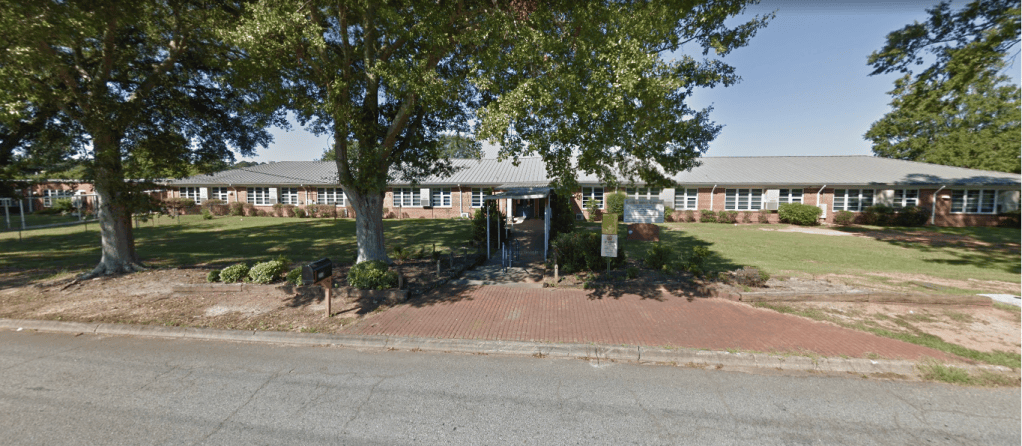
A photo of Program Challenge, began in 1999. The center is designed to meet the needs of gifted elementary school students in Spalding County, Georgia. Photo via the Griffin-Spalding County School System.
On a humid day in August, the morning bell would pierce the ears of students at Futral Road Elementary School. The sound of the first bell of a new year can be met with different emotions for different students. Some feel dread for the year ahead, others feel anxiety rushing to their 8 a.m. classes. Then there were the select number of kids who would make the muggy, 15-minute bus ride to Program Challenge across Spalding County, a rural area in Georgia 40 miles south of Atlanta.
Ginny Singley, a second-year political science student at the University of Georgia was one of those students.
These kids were selected as the “best of the best.” Most get in as young as first-grade, being sent off for two days a week to a school built in the 1950s. They would be separated from their peers and after the bus came to a halt in front of the aged building, their days would begin.
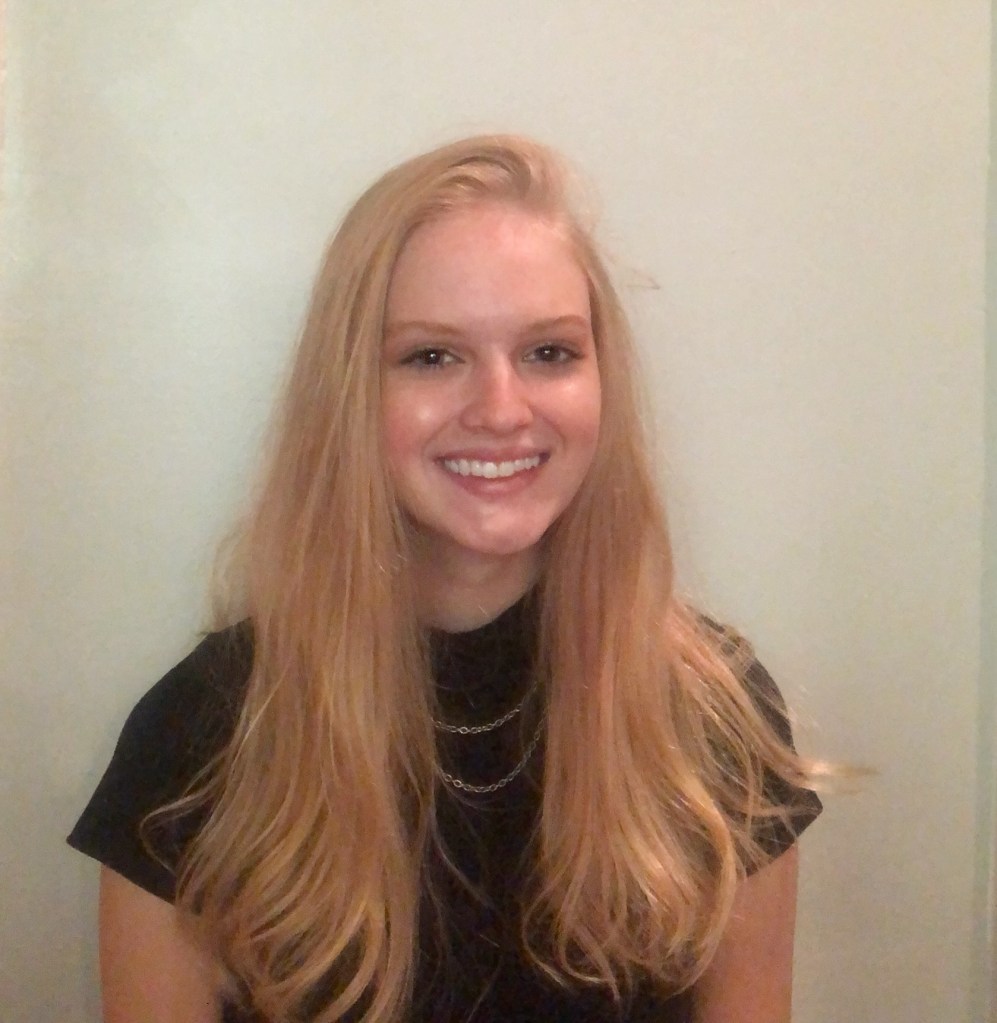
A portrait photo of Ginny Singley, a second-year political science major at the University of Georgia. Photo courtesy of Ginny Singley.
“I cried a lot there, because I wanted to be the best,” Singley said. “It was fun, I don’t regret going, I do regret not allowing myself to be a kid.”
Singley said she would start her days off with “hair-pulling” brain teasers. Afterwards, according to what program you signed up for, you would do a range of activities whether it was making model rockets or dissecting frogs and squid.
These activities, of course, come with the expectation of giftedness. Regardless of peers you leave behind or new friends you make, there is always an underlying sense of competition and rigor.
The process for becoming a gifted student is a tedious one. A student is nominated by a teacher from as early as kindergarten and given the gifted test. If you scored high enough, usually between the 96th and 99th percentiles, you would earn admission into the program.
The programs look different depending on the district, but the definition remains the same. In the state of Georgia, a gifted student is defined as “one who demonstrates a high degree of intellectual and/or creative ability, exhibits an exceptionally high degree of motivation, and/or excels in specific academic fields, and who needs special instruction.”
This, of course, does not come without consequences.
“I definitely put all the expectations on myself, I was my own worst enemy,” Singley said. “I feel I’m never good enough ever and coming to college it felt more magnified.”
Singley is not an aberration. Mattie Rich, a second-year biology and psychology double major at the University of Georgia went through the gifted program as well. She got into the program in first-grade and was always one year ahead of her peers, having completed her entire freshman course load in eighth-grade and even learning algebra as early as second-grade.
“It got to the point where teachers would hand me assignments, not teach me how to do it and expect me to get it done,” Rich said.
Rich says her competitiveness in academics can be traced back to an annual science fair her gifted class held, where the competition was so stiff, she can remember her gifted teacher making her friend cry because her project was not up to par.
Victoria Vesely is a junior special education major whose experience is not unlike Rich and Singley’s. Vesely can remember testing in kindergarten and going to a separate school once a week to hone their skills.
Vesely can vividly remember the gifted program as a “fun thing to do.” But with that came higher expectations.

A photo of Victoria Vesely, a junior special education major at the University of Georgia, at an event. Photo courtesy of Victoria Vesely.
“All of those expectations were self-imposed,” Vesely said. “When you grow up as a gifted kid, people don’t teach you how to handle disappointment.”
Competitiveness and feelings of inadequacy are prevalent among college students. According to a 2021 study by BioMed Central, 55.4% of students experience emotional exhaustion and 24% are stressed about their future and ability to find a job according to a survey by MentalHelp.
These three students share a common experience at the University of Georgia. In a survey sent out to students, 85% responded that they have experienced burnout in the last year.
Academic burnout is a broad term, but it is generally defined as a student’s feeling of debilitation, pessimism and low self-efficacy. It can also be defined as exhaustion and disengagement symptoms due to school demands.
“One of the things that we talk about in my field is perfectionism,” Dr. Meg Hines, a senior lecturer in the department of educational psychology and coordinator of gifted and creative education, said.
According to Dr. Hines, academic burnout can look like stress due to immense expectations surrounding their performance.
Dr. Hines also claimed that whether it is academic support through tutors or mental health resources, socio-economic factors play a hand in burnout. This can be further exacerbated by the need to work during semesters.
According to the National Center for Education Statistics, 40% of full-time undergraduate students had a job on top of their course load.
Burnout can look different for different people. For example, Vesely transferred from Georgia State University and was taking 15 credit hours while working 40-hours a week in the semesters leading up to her transfer.
Singley said the fall 2022 semester was the first break she had since high school, even enrolling in summer courses.
“I had to withdraw from last semester completely,” Singley said. “I felt so overwhelmed.” Singley added that the fall 2022 semester put her into the emergency room at one point due to stress seizures.
Rich said her first burnout episode came in her first semester here in the spring of 2021. She was taking calculus and chemistry simultaneously, saying there were days she went without eating because she “didn’t have time.”
In that semester, Rich was getting acclimated to living on her own and got COVID-19 twice.
“I don’t know how to change the system,” Dr. Hines said. “I think our colleges and universities have a responsibility for the well-being of young people to think about what they’re asking kids to do.”

